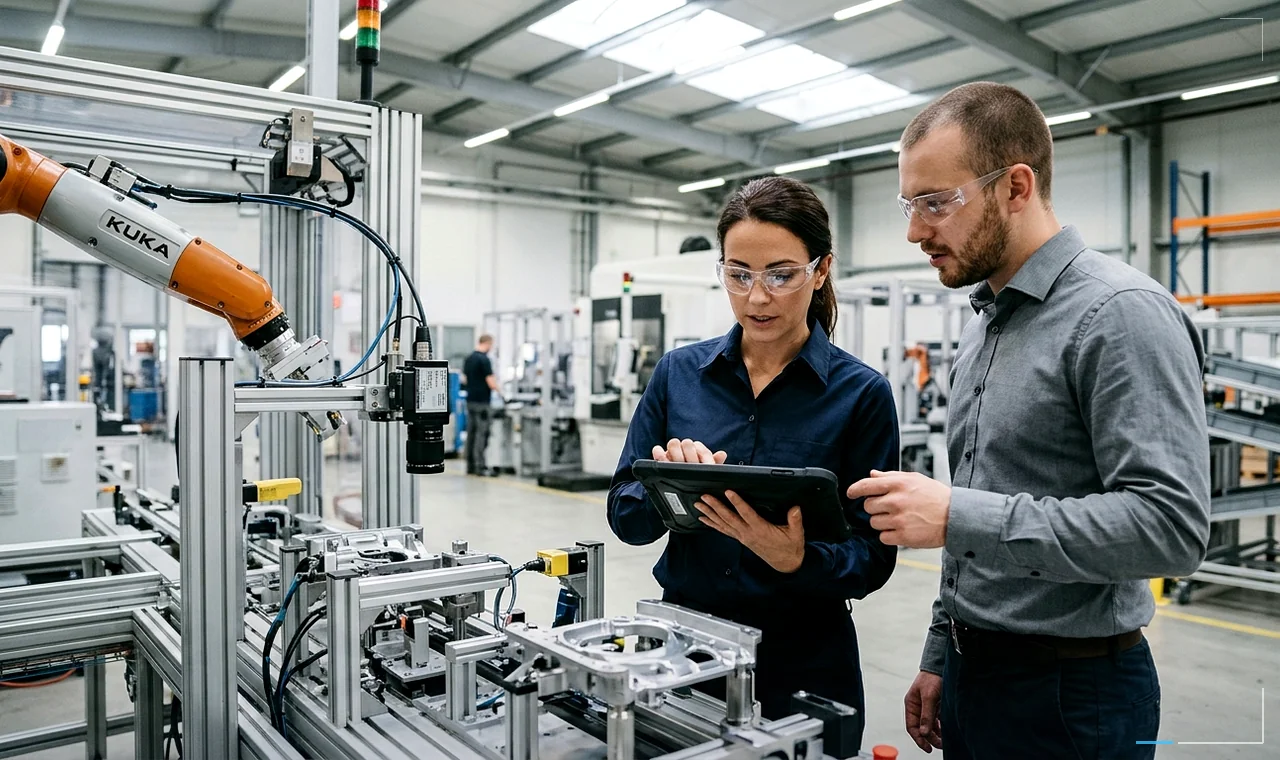
Inspecting shiny machined aluminum parts under factory lighting at 90 pieces per minute strained human inspectors and allowed micro-burrs to slip into customer shipments. SNWN installed polarized industrial camera stations connected to rugged edge GPU boxes running custom PyTorch/ONNX models, managed centrally via cloud MLOps. Defect catch rates climbed to 99.4% in under 45 milliseconds per part, reducing scrap and warranty returns by 38%.
Why Human Eye Fatigue Missed Micro-Defects on Fast Lines
Looking at reflective metal surfaces for eight hours straight is exhausting even for experienced quality technicians. Whenever a hairline burr or thread defect reached an automotive assembly customer, an entire pallet had to be sorted and reworked at high cost.
Key Operational Bottlenecks Before the Project
- Reflective oil sheen on freshly machined parts hid 0.3mm surface scratches from legacy rule-based cameras.
- Plant internet links could not stream raw high-frame-rate video to the cloud fast enough to trigger air-jet diverters.
- Quality managers lacked hourly data on which CNC tool wear was causing spikes in rejected parts.
How We Deployed Reliable Vision AI Right on the Factory Floor
We designed the system to run 100% locally on the plant floor even if external internet goes offline, syncing lightweight metrics and training samples to the cloud.
Standardized LED Dome Lighting and Industrial Camera Captures
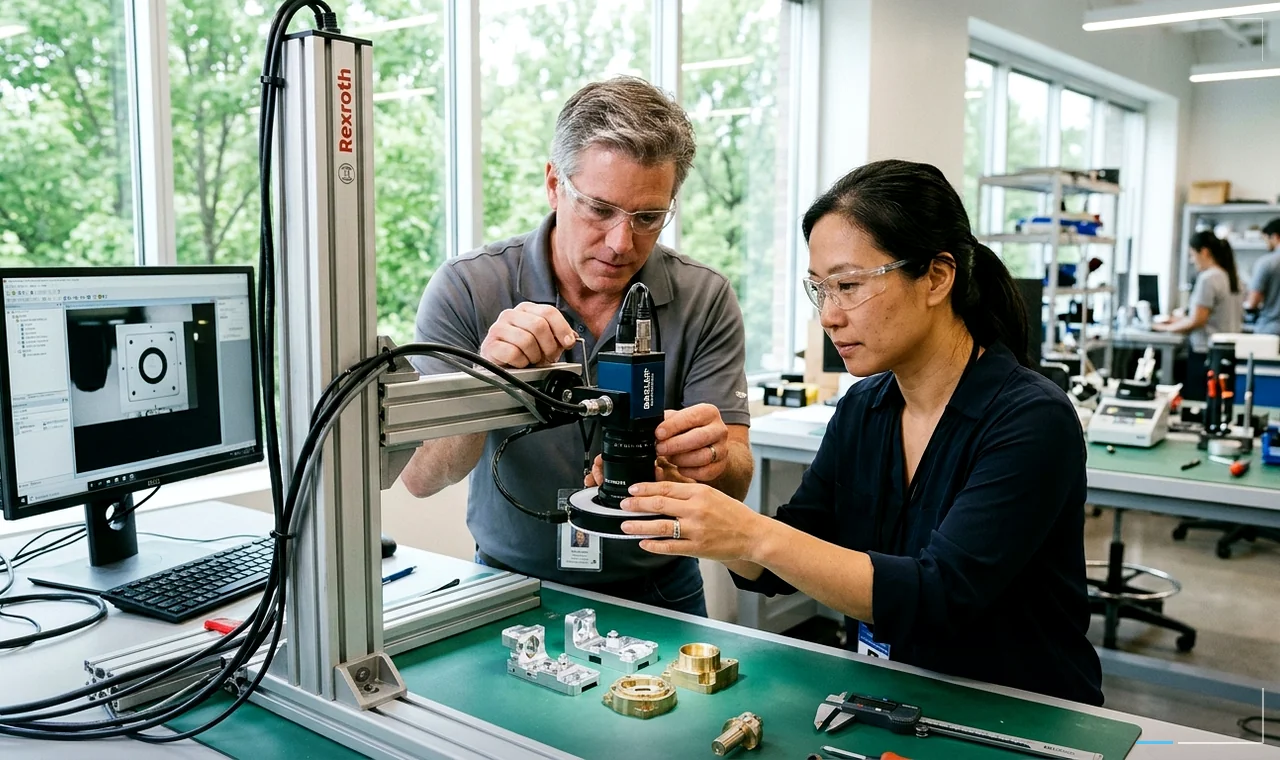
Good vision AI starts with clean optics. We mounted diffused dome lighting and polarized PoE cameras above each conveyor exit to eliminate harsh metal glare before collecting 18,000 labeled part images.
Trained Lightweight Segmentation Models Optimized in ONNX
Using defect samples plus synthetic scratch augmentations, we trained compact segmentation models quantized to FP16 ONNX Runtime so inference completes in 28 to 42 milliseconds on fanless industrial edge boxes.
Wired Edge Decisions Directly to PLC Reject Gates and Operator Tablets
When a defective part passes under the lens, Modbus/OPC-UA signals trigger a pneumatic reject chute immediately and show a zoomed bounding-box snapshot on the line supervisor's tablet.
Built a Central MLOps Pipeline for New Part SKU Rollouts
Borderline images upload overnight to a central cloud MLOps hub where quality leads label edge cases in 15 minutes and push updated model weights to all four plants via signed container updates.
Cleaner Shipments and Early CNC Tool-Wear Warnings
Instead of discovering bad batches at the shipping dock, line operators now spot drifting CNC cutting tools within five minutes of the first micro-burr.
Defect Catch Accuracy
Verified across 1.8 million inspected parts per month at full line speed.
Reduction in Scrap & Rework
Early trend alerts stop worn CNC inserts before hundreds of parts are spoiled.
Edge Inference Latency
Runs locally on fanless factory gateways with zero dependency on WAN internet.
Day-to-Day Business Impact
- Customer quality chargebacks fell by 82% across tier-one automotive accounts.
- Reassigned quality technicians from repetitive eye-strain sorting to preventive process calibration.
- Onboarded 14 new part SKUs in under two weeks each using the shared MLOps pipeline.
Tools, Platforms, and Technologies Used
Every component in this deployment was selected for long-term stability, clear observability, and straightforward handover so internal engineers never get locked into black-box scripts.
Machine Learning & Computer Vision
See how our specialists design, migrate, and manage workloads like this every day.
Frequently Asked Questions About This Project
Does factory internet downtime stop the AI quality inspection line?
No. All camera capture, model inference, and PLC reject signals run 100% locally on ruggedized edge hardware inside the plant. Cloud connectivity is only used for analytics dashboards and pushing model updates.
How many defective part photos are needed to train an accurate model?
By starting with pre-trained industrial backbones and controlled dome lighting, we typically reach production-grade accuracy with just 150 to 300 real defect examples per defect class.
How do plant operators interact with the system during a shift?
Operators see a simple green/amber touchscreen showing live pass rates, recent defect snapshots, and automatic alerts if one specific machining station starts drifting out of tolerance.