preloader

Enterprise Microservices Architecture &
API Engineering

SNWN Tech Solution delivers enterprise microservices architecture and API development services to modernize legacy applications and accelerate digital transformation. We design scalable cloud-native microservices, secure API gateways, and resilient distributed systems, enabling independent deployments, improved application performance, faster release cycles, enhanced maintainability, and greater business agility across enterprise environments.

01

Clear Service Boundaries

Shape services around well-defined business domains.

02

Secure API Platforms

Connect systems through governed gateways and APIs.

03

Resilient Distributed Systems

Improve independent delivery and fault isolation.

Delivery challenges

Architectural Comparison: Legacy Monoliths vs. Modern Microservices

Engineering teams move faster when their delivery process is visible, repeatable, and easy to improve.

Business growth
Fragmented systems
Operational strain
Pressure point 01

Scaling Inefficiency

Scaling a high-demand feature requires replicating the entire application instance, drastically increasing cloud compute expenses.

Operational impact
This makes changes harder to review and repeat across teams.
How SNWN responds
Targeted Auto-Scaling: Independent services auto-scale dynamically based on specific resource metrics (CPU, RAM, queue depth).
Pressure point 02

Fragile Deployments

A single unhandled exception or memory leak in a secondary module can crash the entire enterprise platform.

Operational impact
The extra handoffs can delay releases and make ownership unclear.
How SNWN responds
Fault Isolation & Circuit Breaking: Isolated runtime containers ensure localized failures fall back gracefully without degrading critical business flows.
Pressure point 03

Technology Lock-In

The platform is bound to a single programming framework and monolithic database schema, restricting modern technology adoption.

Operational impact
Teams may spend time fixing avoidable differences between environments.
How SNWN responds
Polyglot Architecture: Teams adopt optimal languages (Go, Node.js, Python, Java) and persistence layers (Relational, Document, Graph) per domain.
Pressure point 04

API Sprawl & Governance

Undocumented endpoints and ad-hoc point-to-point connections introduce security risks and high maintenance overhead.

Operational impact
Without useful feedback, reliability problems can be harder to catch early.
How SNWN responds
Unified API Governance: Centralized gateways enforce standard security protocols, rate limiting, schema contracts, and developer portals.

Engineering capability map

Core Microservices & API Capabilities

Connect the right engineering practices, automation, and platform tools to the way your teams deliver software.

DesignService boundaries
BuildIndependent services
ConnectManaged APIs
OperateTrace and improve
Capability 01

Monolith-to-Microservices Decomposition

Deconstruct monolithic codebases into autonomous domain services using Domain-Driven Design and Strangler Fig patterns without disrupting live production traffic.

Practical deliverables

  • Deconstruct monolithic codebases into autonomous domain services using Domain-Driven Design and Strangler Fig patterns without disrupting live production traffic.
Capability 02

Enterprise API Gateway & Governance Integration

Deploy enterprise API gateways with centralized rate limiting, JWT validation, SSL termination, and dynamic routing to guarantee secure access.

Practical deliverables

  • Deploy enterprise API gateways with centralized rate limiting, JWT validation, SSL termination, and dynamic routing to guarantee secure access.
Capability 03

Event-Driven Architecture & Message Brokers

Build high-throughput asynchronous communication backbones utilizing Kafka and RabbitMQ to process peak transaction volumes with guaranteed message delivery.

Practical deliverables

  • Build high-throughput asynchronous communication backbones utilizing Kafka and RabbitMQ to process peak transaction volumes with guaranteed message delivery.
Capability 04

Modern API Engineering (GraphQL, REST, gRPC)

Engineer high-performance gRPC contracts, OpenAPI REST interfaces, and unified GraphQL federation layers backed by strict automated schema validation.

Practical deliverables

  • Engineer high-performance gRPC contracts, OpenAPI REST interfaces, and unified GraphQL federation layers backed by strict automated schema validation.
Capability 05

Service Mesh Deployment & Observability

Deploy Istio and Linkerd service meshes to enforce mutual TLS encryption, fine-grained traffic policies, and distributed OpenTelemetry tracing.

Practical deliverables

  • Deploy Istio and Linkerd service meshes to enforce mutual TLS encryption, fine-grained traffic policies, and distributed OpenTelemetry tracing.

Applied engineering workflows

Practical Enterprise Microservices Architecture & API Engineering Use Cases

See how platform engineering improvements can reduce friction in the everyday work of building and operating software.
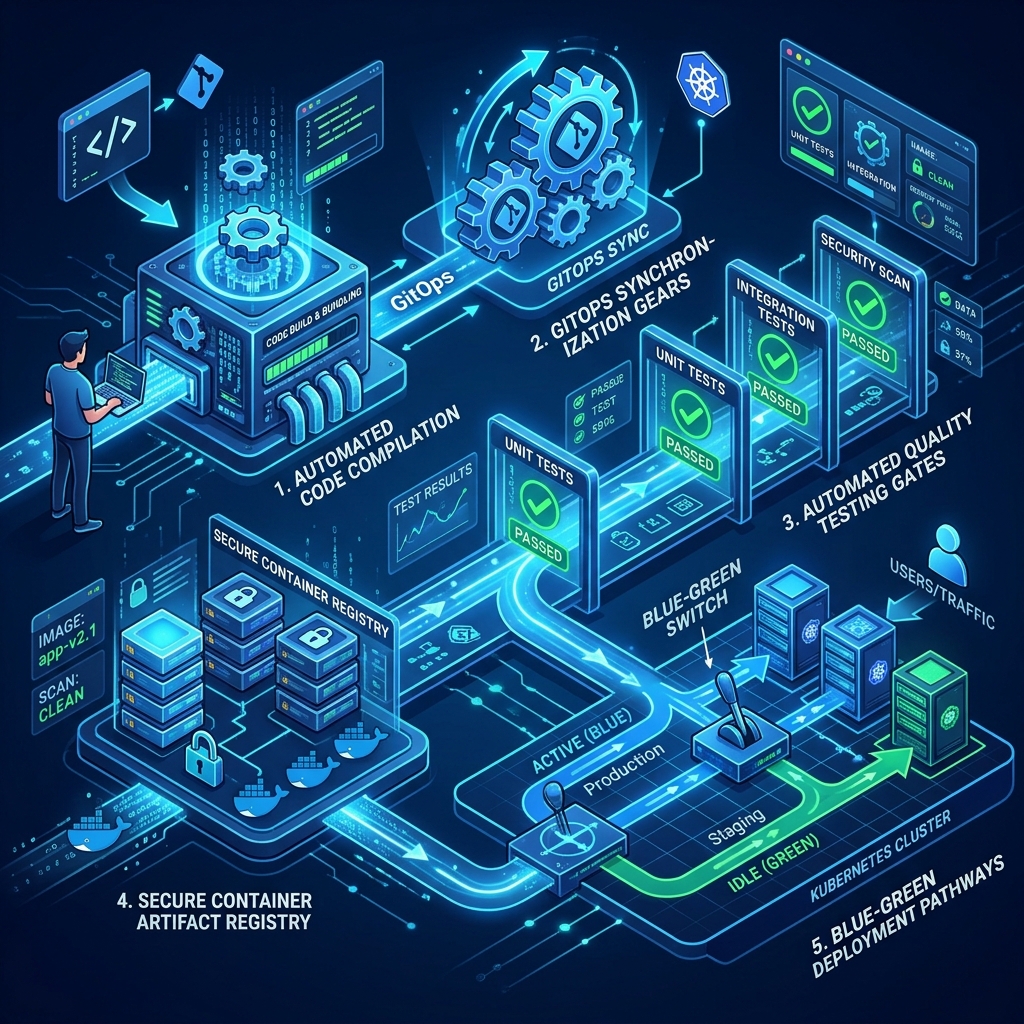
Core Microservices & API Capabilities - SNWN Tech Solution
Built around your sectorEngineering For,
Enterprise Microservices Architecture & API Engineering

Select a use case to view its scenario, outcome and delivery steps.

Use Case 01

Sub-50ms API Latency

Related: DevOps Consulting →

Optimize GraphQL, gRPC, and REST endpoints backed by multi-tier edge caching, in-memory data grids, and non-blocking asynchronous I/O execution models.

OutcomeOptimize GraphQL, gRPC, and REST endpoints backed by multi-tier edge caching, in-memory data grids, and non-blocking asynchronous I/O execution models.
  1. Review

    Scaling a high-demand feature requires replicating the entire application instance, drastically increasing cloud compute expenses.

  2. Design

    Deconstruct monolithic codebases into autonomous domain services using Domain-Driven Design and Strangler Fig patterns without disrupting live production traffic.

  3. Automate

    Optimize GraphQL, gRPC, and REST endpoints backed by multi-tier edge caching, in-memory data grids, and non-blocking asynchronous I/O execution models.

  4. Improve

    Analyze monolithic application boundaries, map internal dependencies, and identify initial targets for microservice extraction.

Use Case 02

100% Autonomous Deployability

Related: CI/CD Automation →

Decouple CI/CD delivery pipelines and trunk-based deployment models enabling distributed feature teams to push updates continuously without cross-team release coordination.

OutcomeDecouple CI/CD delivery pipelines and trunk-based deployment models enabling distributed feature teams to push updates continuously without cross-team release coordination.
  1. Review

    A single unhandled exception or memory leak in a secondary module can crash the entire enterprise platform.

  2. Design

    Deploy enterprise API gateways with centralized rate limiting, JWT validation, SSL termination, and dynamic routing to guarantee secure access.

  3. Automate

    Decouple CI/CD delivery pipelines and trunk-based deployment models enabling distributed feature teams to push updates continuously without cross-team release coordination.

  4. Improve

    Provision enterprise API gateways, event messaging systems, CI/CD automation pipelines, and core security layers.

Use Case 03

99% API Gateway Uptime SLA

Related: Infrastructure as Code →

Ensure continuous enterprise traffic availability featuring automated multi-region failover, dynamic rate limiting, global health checks, and intelligent edge DDoS mitigation.

OutcomeEnsure continuous enterprise traffic availability featuring automated multi-region failover, dynamic rate limiting, global health checks, and intelligent edge DDoS mitigation.
  1. Review

    The platform is bound to a single programming framework and monolithic database schema, restricting modern technology adoption.

  2. Design

    Build high-throughput asynchronous communication backbones utilizing Kafka and RabbitMQ to process peak transaction volumes with guaranteed message delivery.

  3. Automate

    Ensure continuous enterprise traffic availability featuring automated multi-region failover, dynamic rate limiting, global health checks, and intelligent edge DDoS mitigation.

  4. Improve

    Extract target services sequentially and dynamically route production traffic via the API gateway, maintaining zero downtime.

Delivery approach

How We Deliver Enterprise Microservices Architecture & API Engineering Projects

We work in clear stages, validate changes with your team, and prepare the workflow for ongoing ownership.

Select a step to explore its activities, buyer inputs and outputs.

  1. Step 01

    Domain Discovery & DDD Mapping

    Analyze monolithic application boundaries, map internal dependencies, and identify initial targets for microservice extraction.

    Engineering Activities

    • Analyze monolithic application boundaries, map internal dependencies, and identify initial targets for microservice extraction.

    Buyer Inputs

    • Share relevant repositories, environments, access, and team ownership for this stage.

    Concrete Outputs

    • Documented results and agreed next actions for domain discovery & ddd mapping.
  2. Step 02

    Gateway & Foundation Setup

    Provision enterprise API gateways, event messaging systems, CI/CD automation pipelines, and core security layers.

    Engineering Activities

    • Provision enterprise API gateways, event messaging systems, CI/CD automation pipelines, and core security layers.

    Buyer Inputs

    • Share relevant repositories, environments, access, and team ownership for this stage.

    Concrete Outputs

    • Documented results and agreed next actions for gateway & foundation setup.
  3. Step 03

    Incremental Strangler Extraction

    Extract target services sequentially and dynamically route production traffic via the API gateway, maintaining zero downtime.

    Engineering Activities

    • Extract target services sequentially and dynamically route production traffic via the API gateway, maintaining zero downtime.

    Buyer Inputs

    • Share relevant repositories, environments, access, and team ownership for this stage.

    Concrete Outputs

    • Documented results and agreed next actions for incremental strangler extraction.
  4. Step 04

    Data Decoupling & Persistence Migration

    Split shared monolithic database tables into dedicated service databases, utilizing event streams to maintain consistency.

    Engineering Activities

    • Split shared monolithic database tables into dedicated service databases, utilizing event streams to maintain consistency.

    Buyer Inputs

    • Share relevant repositories, environments, access, and team ownership for this stage.

    Concrete Outputs

    • Documented results and agreed next actions for data decoupling & persistence migration.
  5. Step 05

    Observability, Testing & Handoff

    Implement complete distributed tracing, automated integration testing, and interactive OpenAPI documentation for team handoff.

    Engineering Activities

    • Implement complete distributed tracing, automated integration testing, and interactive OpenAPI documentation for team handoff.

    Buyer Inputs

    • Share relevant repositories, environments, access, and team ownership for this stage.

    Concrete Outputs

    • Documented results and agreed next actions for observability, testing & handoff.

Ownership, guardrails & operations

Build a Platform Teams Can Safely Own

Good engineering workflows make the paved path easy to use while keeping security, reliability, and ownership visible.

Service scope and boundaries

Before delivery starts, we agree which repositories, cloud accounts, clusters, pipelines, and environments are in scope, along with change controls, access needs, and the teams responsible for ongoing operations.

Developer-friendly standards

Make common engineering tasks easier to start and repeat.

  • Pragmatic engineering evaluating enterprise architecture tradeoffs objectively.
  • Domain driven design aligning services with business capabilities.

Security and reliability guardrails

Build review, access, and policy checks into the workflow.

  • Full stack distributed tracing and telemetry observability.
  • Zero downtime incremental strangler fig migration expertise.

Operational ownership

Keep service owners, support paths, and follow-up work clear.

  • High throughput event driven streaming message architectures.

Engineering readiness checklist

Enterprise Microservices Architecture & API Engineering Readiness Checklist

Use these checks to prepare your team, repositories, environments, and delivery goals for a focused engineering review.

Workflow & ownership

4 checks
  • High Performance Low Latency APIs
  • Domain Driven Microservices Architecture Design
  • Decoupled Autonomous Production Deployment Pipelines
  • Enterprise Intelligent API Gateway Ingress

Automation & environments

4 checks
  • Zero Trust Mutual TLS Mesh
  • Event Driven Apache Kafka Streaming
  • Zero Downtime Strangler Fig Migrations
  • GraphQL REST gRPC Interface Engineering

Reliability & operations

4 checks
  • Multi Tier Distributed Edge Caching
  • Automated Circuit Breaking Fault Isolation
  • Full Stack OpenTelemetry Distributed Tracing
  • Continuous Platform Engineering Advisory Support

Common questions

Frequently Asked Questions - Enterprise Microservices Architecture & API Engineering

Clear answers to help your team plan the right next step.

Is migrating to microservices risky for active enterprise platforms?

Risk is minimized by avoiding complete "big-bang" rewrites. We utilize the Strangler Fig pattern to migrate business capability modules incrementally behind an API Gateway, keeping the monolithic system operational while shifting live traffic seamlessly.

How do microservices impact cloud infrastructure hosting costs?

While microservices require baseline infrastructure for orchestration and gateways, they deliver major cost efficiencies at scale. Rather than scaling entire monolithic application instances to accommodate single high-demand features, you independently auto-scale only the specific microservices facing heavy workload.

When should we choose gRPC over RESTful APIs?

We recommend RESTful APIs (OpenAPI 3.0) for external developer APIs, web clients, and partner integrations requiring standard HTTP semantics and broad tooling compatibility. We leverage gRPC with Protocol Buffers for high-throughput internal microservice-to-microservice communication where ultra-low latency, strict binary typing, and bidirectional streaming are critical.

How is data consistency maintained across distributed microservice databases?

We enforce the Database-per-Service pattern to prevent tight database coupling. Cross-service data consistency is achieved using asynchronous event-driven architectures with Apache Kafka or RabbitMQ, alongside the Saga pattern (choreography or orchestration) to coordinate distributed transactions reliably without two-phase commit locks.

Start a practical conversation

Ready to Modernize Your Monolith & Build Resilient APIs?

Partner with certified software architects and API platform engineers at SNWN Tech Solution to decompose monolithic bottlenecks, implement enterprise API gateways, and accelerate feature velocity.