
As a telemetry analytics company scaled past 8 petabytes of hot and warm data, public-cloud NVMe storage and bandwidth egress fees began eating nearly half of gross revenue. SNWN designed, built, and manages a dual-data-center OpenStack private cloud backed by all-flash Ceph NVMe storage, paired with BGP links to AWS for elastic burst jobs. Three-year total cost of ownership dropped by 47% while query disk IOPS more than doubled.
When Public Cloud Egress and NVMe Fees Squeeze Gross Margins
Public cloud is great for spiky startups, but steady 24/7 high-bandwidth ingestion and petabyte NVMe clusters carry a steep markup. Every time enterprise customers queried historical video and telemetry streams, bandwidth charges spiked unpredictably.
Key Operational Bottlenecks Before the Project
- Bandwidth egress and cross-zone replication fees exceeded raw compute spend every single month.
- Provisioned IOPS storage tiers throttled analytical queries unless expensive enterprise tiers were enabled.
- The client wanted cloud-style APIs and Terraform automation without hiring a 10-person hardware team.
How We Built a Cloud-Like Private Estate Without Operational Headaches
We gave the client's developers the exact same Terraform and Kubernetes workflows they loved on AWS - running on dedicated bare-metal OpenStack racks managed 24/7 by SNWN.
Modeled Workload Economics to Keep Steady Base Loads Private and Bursts Public
We analyzed 12 months of compute and network curves. Steady 24/7 ingestion, hot NVMe databases, and customer egress moved to dual tier-three colocation sites, while rare seasonal batch jobs stayed elastic on AWS.
Deployed Redundant OpenStack and All-Flash Ceph NVMe Clusters
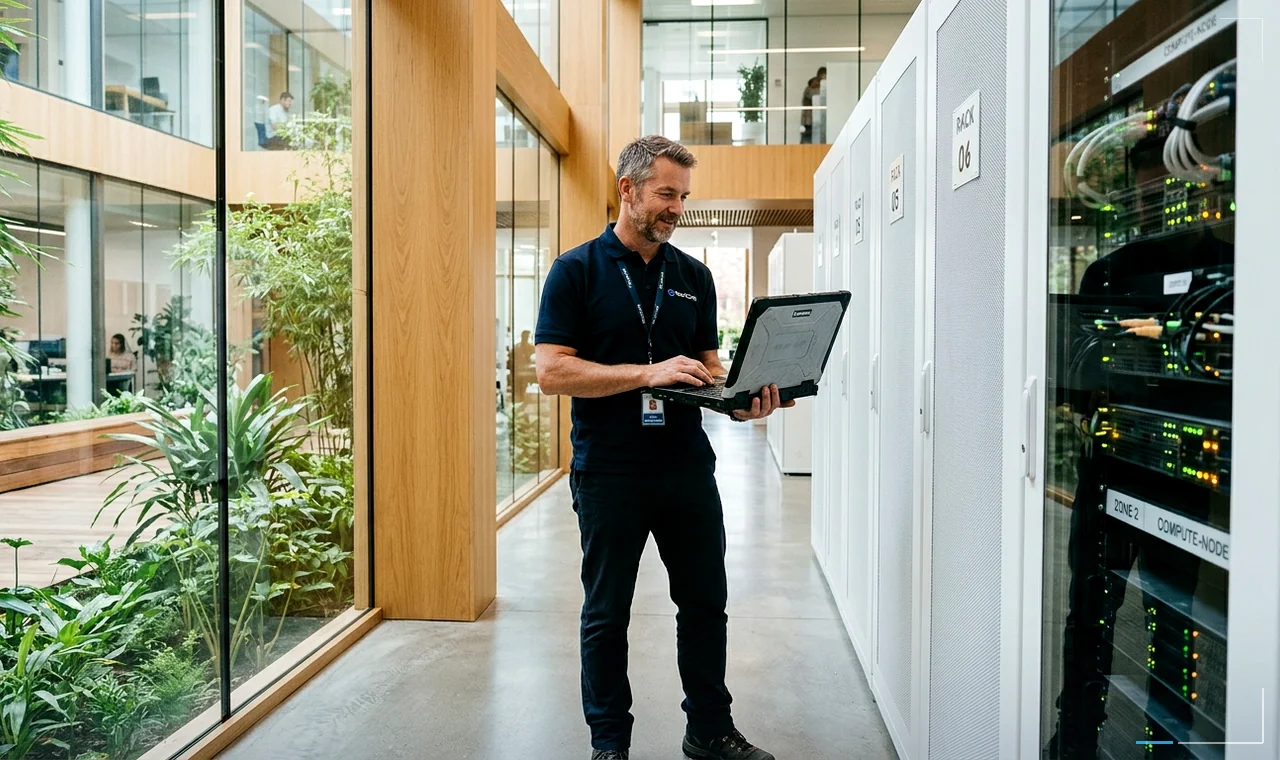
Using Kolla-Ansible, we stood up high-availability OpenStack control planes, 100GbE leaf-spine networking, and erasure-coded Ceph NVMe storage capable of surviving full rack or node failures without downtime.
Connected Private Racks to AWS via Redundant Direct BGP Links
Dual private interconnects and WireGuard failover tunnels unified private OpenStack projects and AWS VPCs so microservices communicate seamlessly over low-latency private IPs.
Synced 8 PB of Data Online and Handed Day-2 Ops to SNWN's 24/7 Team
Background S3-compatible RGW replication mirrored historical buckets prior to DNS cutover. SNWN's 24/7 infrastructure team handles drive replacements, OpenStack upgrades, and capacity forecasting.
Predictable Flat-Rate Infrastructure and Faster Customer Queries
Removing per-gigabyte bandwidth metering let the client launch unlimited-replay analytics tiers that competitors on pure public cloud could not match on price.
Lower 3-Year TCO
Includes hardware amortization, colocation power, bandwidth, and 24/7 SNWN management.
Higher Query Disk IOPS
Bare-metal Gen4 NVMe drives eliminated virtualized storage throttling.
Terraform API Compatibility
Developers provision VMs, volumes, and Kubernetes nodes using standard IaC code.
Day-to-Day Business Impact
- Saved $1.1M over 36 months compared to equivalent public-cloud storage and egress commitments.
- Launched a flat-rate enterprise data replay tier that lifted annual contract values by 19%.
- Survived two carrier fiber cuts and three NVMe drive swaps with zero customer impact.
Tools, Platforms, and Technologies Used
Every component in this deployment was selected for long-term stability, clear observability, and straightforward handover so internal engineers never get locked into black-box scripts.
OpenStack Private Cloud
See how our specialists design, migrate, and manage workloads like this every day.
Frequently Asked Questions About This Project
When does repatriating workloads to OpenStack make financial sense?
Once steady-state cloud bills pass roughly $35,000 to $50,000 a month with heavy storage IOPS or high outbound bandwidth, a hybrid OpenStack setup typically cuts 3-year TCO by 35% to 50%.
Who handles failed drives and OpenStack version upgrades?
SNWN's 24/7 infrastructure squad monitors SMART disk health, coordinates remote-hands hardware swaps in colocation facilities, and executes rolling zero-downtime OpenStack and Ceph upgrades.
Can we still burst into AWS or GCP during sudden traffic spikes?
Yes. Hybrid BGP networking and federated Kubernetes clusters let you run baseline capacity at flat private-cloud economics while bursting overflow jobs to public cloud on demand.